Assignments for 24.09.26

1a. Complete the advice about friendship

1.If your life has changed recently, your friends might need to change too.
2.If you have just moved to a new area, it’s a good idea to join some clubs.
3.People usually make friends at work, so try inviting some work colleagues out socially.
4.Don’t automatically say no to an invitation, even if you are getting ready for bed when the 5.phone rings. If you keep saying no, people will stop inviting you.
6.Try to meet your friend’s friends. They like them, so you probably will, too.
7.When someone refuses your invitation, try again another time.

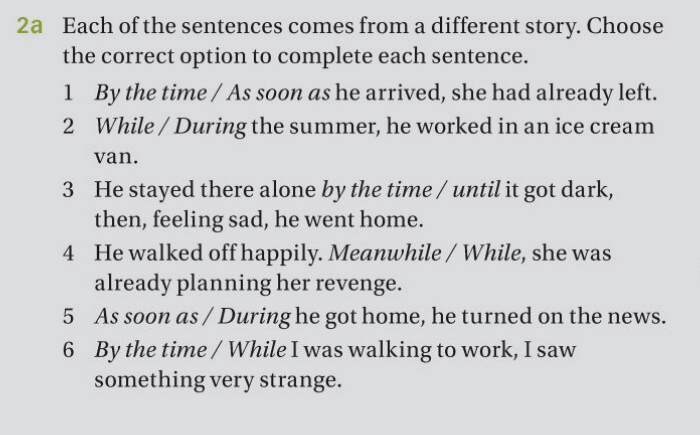
2a. Choose the most appropriate form

Social networking sites do not seem to help people make close friends, according to researchers who studied how the websites are changing friendship.

Although social networking means that many people now have hundreds or even thousands of ‘friends’, the researchers believe that to become a real friend, it is still important to actually meet up. Social networking has become very popular recently, but although people now keep in touch(or: are now keeping in touch) with more friends online, the researchers found that we still usually have only around five close friends. We only develop real friendships when we know we can trust someone.

4a. Choose the odd word out

seller, items, full price

5a. Complete the sentences using the noun form

1.Happiness is more important than having lots of money.

2.My relationship with my boss has never been very good.

3.How can you afford the membership at the tennis club?

4.He gave me some very useful information about the new apps that are available for my phone.

5.Have you seen the new development of houses by the river?

6.I don’t really like my job, but I need the security of a regular salary.

6a. Choose the correct word to complete each phrase

1.Personally, I think…

2.Shouldn’t people…

3.I really feel that…

4….if you ask me.

5.According to…

6.As far as I’m concerned…

assignment for 22.09.2026

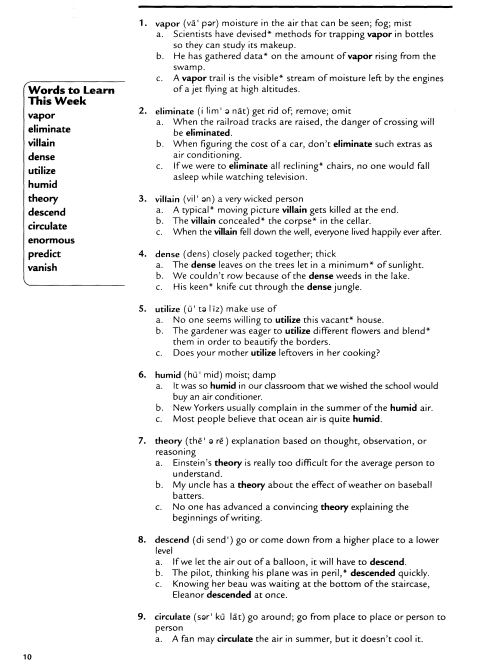
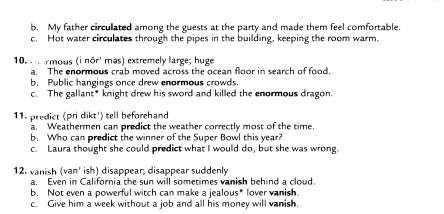
1.vapor — գոլորշի
2.eliminate — վերացնել, հեռացնել
3.villain — չարագործ
4.dense — խիտ, թանձր
5.utilize — օգտագործել, կիրառել
6.humid — խոնավ
7.theory — տեսություն
8.descend — իջնել, ցածրանալ
9.circulate — շրջանառվել, տարածվել
10.enormous — հսկայական, ահռելի
11.predict — կանխատեսել
12.vanish — անհետանալ, չքանալ

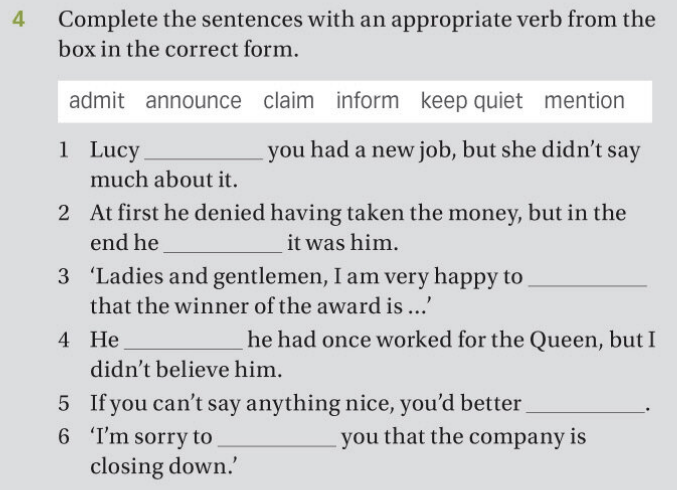
corpse- Դիակ
conceal-թաքցնել
dismal-տխուր
frigid-Սառը
inhabit-բնակվել
numb-թմրած
peril-վտանգ
recline-հենվել
shriek-սուր ճիչ
sinister-չարագուշակ
tempt-գայթակղել
wager-գրավ

Assignments for 17. 09.26

1. B That sounds like a good idea.
2. A Do you have a few minutes to help me?
3. A I don’t understand. What do you mean by ‘trending’?
4. A I’m trying to download some photos. Can you help me?
4. B Sure. Do you know why it isn’t working?
4. A I think the file’s too big. It looks like that’s causing the problem.

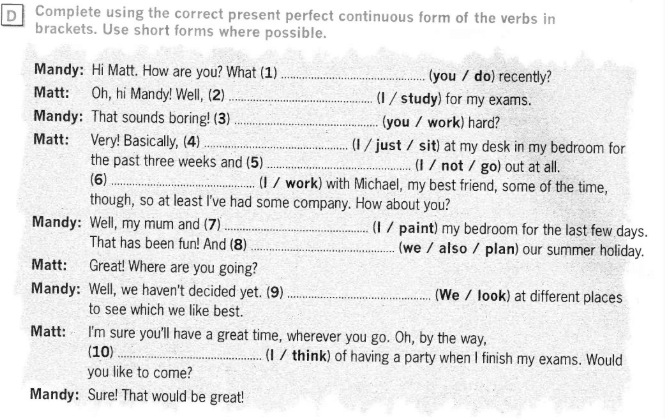
1.This is Carlos. He comes from Spain.

2.Peter is on his way. He is coming by bus.

3.I see your point, but I don’t agree with you.

4.You’re quiet? What are you thinking about?

5.What do you think of the new James Bond film?

6.I imagine you’re very tired after your journey.

7.Jamal isn’t here. He is having his lunch.

8.Does anybody have any questions?

9.The umbrella’s not mine. I think it belongs to Annette.

10,Yuck! This soup tastes horrible. And it looks disgusting, too.

11.I am looking for my keys. Do you know where they are?

Online shopping ¹ seems to become more popular every year. According to a recent report, over half of US consumers with internet access now ² prefer shopping online, and just 1% say they have never shopped online. Experts ³ know that consumers spend on average around $100 per online order. The most common types of goods bought online ⁴ include electronics, books, clothing and household goods.

There are a number of reasons why online shopping ⁵ is increasing. Cheaper prices and a large variety of products ⁶ are the main reasons, according to the survey. The ability to compare products and read reviews ⁷ is another reason. Most online shoppers say that they often ⁸ make a decision to buy a product when five or more reviewers ⁹ agree that the product is good value for money.

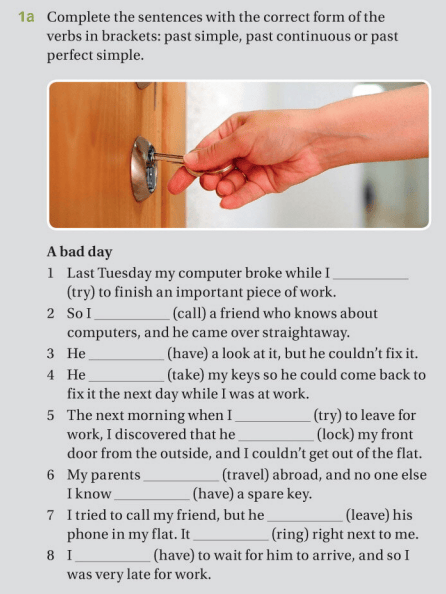
All 12 Tenses In English

Present Tenses
Present tenses describe things happening now, general facts, or ongoing habits.

Present Simple:

Used for habits and facts (e.g., “I work”, “She reads”). Form: Base verb (+s/es for he/she/it).

Present Continuous:

Used for actions happening right now (e.g., “I am working”). Form: am/is/are + verb-ing.

Present Perfect:

Used for past actions with current relevance or life experience (e.g., “I have worked”). Form: have/has + past participle.

Present Perfect Continuous:

Used for ongoing actions that started in the past and continue now (e.g., “I have been working”). Form: have/has been + verb-ing.

Past Tenses
Past tenses describe events that happened before the present moment.

Past Simple:

Used for completed actions at a specific time (e.g., “I worked”). Form: Past form of verb (V2 / -ed).

Past Continuous:

Used for actions in progress at a specific past moment (e.g., “I was working”). Form: was/were + verb-ing.

Past Perfect:

Used for an action completed before another past action (e.g., “I had worked”). Form: had + past participle.

Past Perfect Continuous:

Used for an ongoing past action interrupted by another or lasting until a past point (e.g., “I had been working”). Form: had been + verb-ing.

Future Tenses
Future tenses express beliefs, predictions, or plans regarding time yet to come.

Future Simple:

Used for predictions or spontaneous decisions (e.g., “I will work”). Form: will + base verb.

Future Continuous:

Used for actions in progress at a specific future time (e.g., “I will be working”). Form: will be + verb-ing.

Future Perfect:

Used for actions completed before a future point (e.g., “I will have worked”). Form: will have + past participle.

Future Perfect Continuous:

Used for duration up to a specific future point (e.g., “I will have been working”). Form: will have been + verb-ing.

_______________________________________________________

Tense Look for these Helping Verbs Look for this Main Verb Example


Present Simple None (or do/does for questions) Base form (adds -s/-es for he/she/it) She reads.


Present Continuous am / is / are Verb + -ing I am reading.


Present Perfect has / have Past Participle (V3 / -ed) She has read the book.


Present Perfect Continuous has been / have been Verb + -ing I have been reading.


Past Simple None (or did for questions) Past form (V2 / -ed) She read yesterday.


Future Perfect Continuous will have been Verb + -ing I will have been working.

3 Steps to Identify Any Tense

Find the verbs: Locate the action words in the sentence.

1.Look for “Will”: If you see will, it is instantly a Future tense.

2.Look for “-ing”: If the main verb ends in -ing, it is a Continuous tense.

3.Look for “Have/Has/Had”: If you see these, it is a Perfect tense.

for example: “I will have been working”
Step 1: we have <will> → It is Future.

Step 2: we have <have + been> → It is Perfect.
Step 3: we have <ing> → It is Continuous.

Result: Future Perfect Continuous.

Assignments for 14.09.26

Navigate B1 Learn the words 4a slide 8, ex-es 8a, 10 a slide 9
Choose one topic , write 100-150 words about the topic, post it on your blog and be ready to discuss in class.

8a.

1. Can you explain a little about what Buy Nothing Day means?

2. When you really think about it, the idea of buying things as a way of spending your leisure time is crazy.

3. We believe  shopping makes us happy, but it doesn’t.

4. Yes, I agree , that’s a good point.

5. We all own far too much.

6. Most of the time we prefer  people to buy locally …

7. Most people don’t understand  how difficult it is … 

10a.

In Poster 1 there are some people who are standing inside a shopping basket. I like this one because I think it shows the idea of being trapped by shopping very well. It seems to be saying that we don’t understand that we are in a cage. It’s simple but quite a powerful message. Poster 2 looks quite good, but I’m not sure what it is trying to say. It’s obviously based on the Tetris video game, and the four blocks at the top that say ‘buy’ clearly fit, but I’m not sure it would make me want to stop shopping. I definitely prefer the first one.

How Do We Decide What to Buy?

We decide what to buy through our own free will and choices. For example, when we see something attractive in a shop, we may suddenly want to purchase it, even if we do not really need it. The product can be useful and healthy, or it can be harmful and unnecessary.

Our decisions are also influenced by advertisements, discounts, social media, and other people. Sometimes, we buy something simply because it is popular or because an advertisement makes it look interesting. However, this can make us spend money on things we do not actually need.

“I think we should always ask ourselves, ‘Do I really need this?’ or use the 30-Day Savings Rule before buying something. As a wise old man with a white beard once said: ‘If you want to buy something, wait for 30 days. If you still want it, purchase it.’

Assignments for 11.09.26

504 Essential Words Lesson 1, slide 7, page 6 Learn the words with their definitions
Do the ex-es Fill in the Blanks, Word Detective slide 8, page 7

Assigment

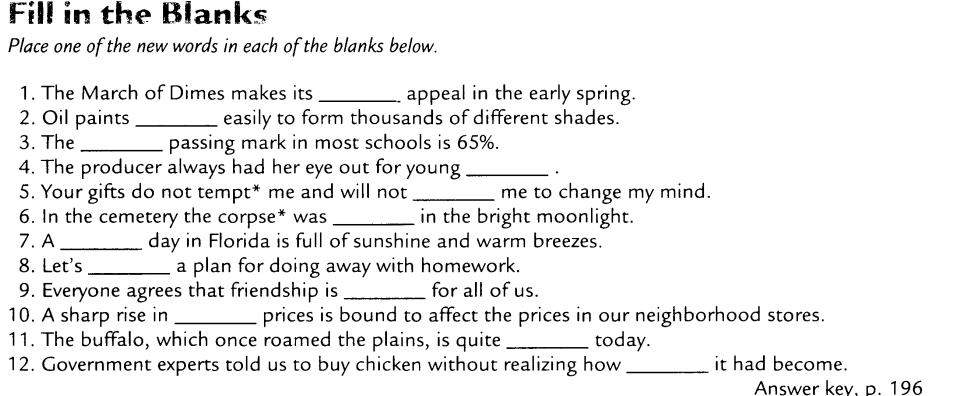
Fill in the Blanks

1.As I looked at all the data the salesman showed me, I knew that I was getting more and more mixed up.

2.I used tact when I told my fat uncle that his extra weight made him look better.

3.When the guard saw that the cot was vacant, he realized that the prisoner had left the jail.

4.Although he took an oath on the Bible, Sal lied to the jury.

5.My aunt was so jealous of our new couch that she bought one just like it.

6.I enjoyed reading the story of the gallant man who put his cloak over a mud puddle so that he queen would not dirty her feet.

7.The loss of Claudia’s eyesight was a hardship which she learned to live with.

8.The driver was forced to abandon his car when two of the tires became flat.

9.Betty could not qualify for the Miss Teenage America Contest because she was twenty years old.

10.The blade was so keen that I cut myself in four places while shaving.

11.Unaccustomed to being kept waiting, the angry woman marched out of the store.

12.Because he was a bachelor, the movie actor was invited to many parties.

Word Detective

1.a promise that something is true: oath

2.sharp; eager; intense: keen

3.to desert; to leave without planning to come back: abandon

4.something that is hard to bear: hardship

5.to become fit: qualify

6.wanting what someone else has: jealous

7.brave; showing respect for women: gallant

8.a man who has not married: bachelor

9.facts; information: data

10.the ability to say the right thing: tact

11.empty; not filled: vacant

12.not used to something: unaccustomed

Assignments for 10.09.26

1. Choose the correct options to complete the text about Facebook.

There are over one billion Facebook users worldwide. And this number is increasing all the time. It is clear that Facebook has changed the way we have looked at friendship. The word “friend” has become a verb, and “friends” now include people we only know online and who we have never met. One positive side to Facebook is that friends who have lost contact, often many years ago, are now able to get in touch again. “And more people are connecting with old friends via Facebook,” says a spokesperson for the website. “And Facebook also means that friends never need to lose touch; people can stay friends for life.”

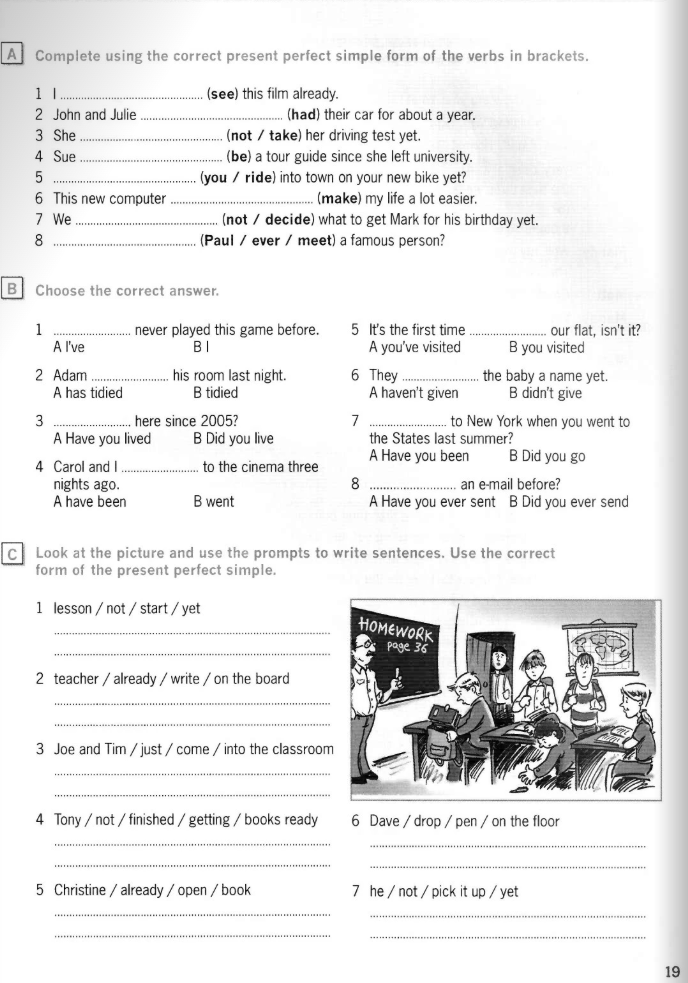
2. Complete the conversations with present simple, present continuous or present perfect form of the verbs in brackets.

1

A: Where do you work?
B: Well, normally I work in Berlin, but I am working in Stuttgart at the moment.

2

A: Have you known Jake?
B: Yes, we have known each other for a few years.

3

A: Do you live in London?
B: Yes, I do. Actually, I have lived there all my life.

4

A: Jameela’s busy at the moment. She is having a piano lesson.
B: Oh yes, of course. She has one every Wednesday.

5

A: Are you emailing Andy yet?
B: I am emailing him right now, actually.

6

A: How many Facebook friends have you got?
B: Not many. I think I have got about fifty or sixty.

7

A: I am looking for my phone.
B: have you looked in the kitchen? I think I saw it in there a few minutes ago.

8

A: You see Karen quite often, don’t you?
B: Usually, yes. But I haven’t seen her for a few weeks now.

9

A: I am reading a great book at the moment – Tribal Life by Bruce James. Have you read it?
B: No, but I have read another one of his books.

Design a site like this with WordPress.com
Get started